A Resident’s Guide to Verifying House Help: A Complete Safety & Trust Checklist Before You Hire
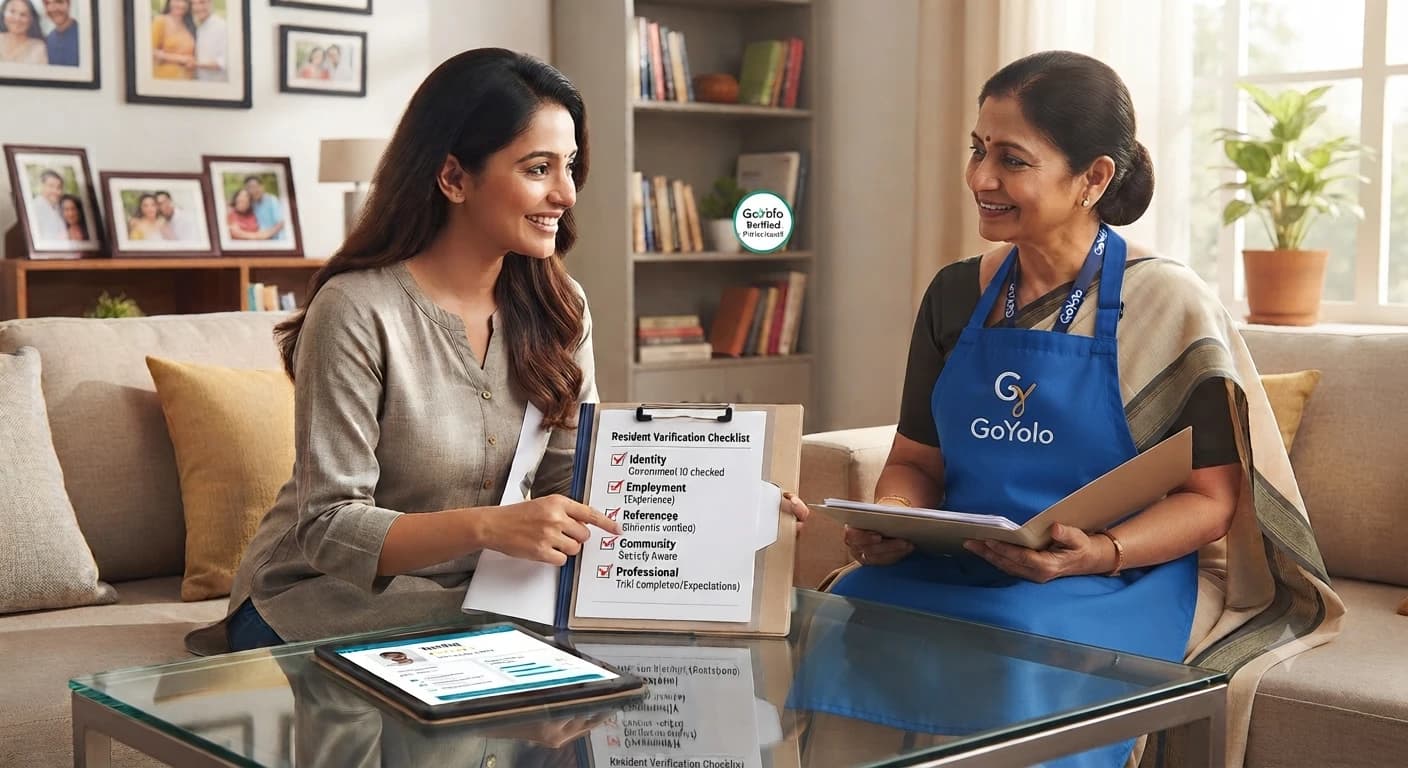
Trust isn’t built by checking one document. It’s built by verifying identity, understanding experience, checking references, setting expectations, and building a respectful professional relationship.
Introduction
Every day, millions of Indian families welcome someone into their homes.
Sometimes it’s a cook, a housekeeper, a babysitter, a caregiver, a driver, or a part-time cleaner. These professionals don’t simply enter your home—they become part of your everyday life. They may have access to your children, your elderly parents, your home, your valuables, and your daily routine. Naturally, every resident wants to feel safe.
Yet many hiring decisions are still based solely on “My neighbour recommended them” or “They’ve been working in another flat.” While recommendations are valuable, they should never replace proper verification.
At the same time, verification shouldn’t become suspicion. Every professional deserves dignity and respect. The goal isn’t to treat domestic workers like potential criminals—the goal is to create trust, for both families and workers.
This guide explains exactly how to verify household professionals in a practical, respectful, and responsible way.
Why Verification Matters
Verification protects everyone:
- It protects your family.
- It protects the worker.
- It protects the residential community.
- It reduces misunderstandings.
- It creates accountability.
- It builds professional relationships.
Verification should be viewed as the beginning of trust—not a barrier to employment.
Verification Isn’t Just About Documents
Many people think verification means checking an Aadhaar card, and that’s it.
In reality, trust has many layers. Think of verification as five pillars.
Pillar 1: Identity Verification
Questions to cover:
- Full name
- Mobile number
- Permanent address
- Current address
- Aadhaar or government ID
- Emergency contact
Pillar 2: Employment Verification
Ask:
- Where are you currently working?
- Who were your previous employers?
- How long did you work there?
- Why did you leave?
- How many houses are you currently working in?
- What timings are you available?
Pillar 3: Reference Verification
Never skip this. Ask previous employers:
- Were they punctual?
- Were they honest?
- Were they reliable?
- How was their attendance?
- Would you hire them again?
- What was the reason for leaving?
Pillar 4: Professional Verification
This is ignored by most people. Can they actually do what they claim?
- Cook — ask them to cook.
- Babysitter — observe their interaction with children.
- Driver — take a driving test.
- Caregiver — discuss how they’d handle emergency situations.
- Housekeeper — observe their cleaning standards.
Pillar 5: Community Verification
One of the strongest trust indicators. Ask:
- Are they already working inside your society?
- Are they known in a nearby society?
- Are they known to security?
- Are they known to the RWA?
- Are they known by neighbours?
Community trust matters.
Different House Helps Need Different Verification
Don’t use the same checklist for everyone.
Home Cook
- Kitchen hygiene
- Nutrition
- Food safety
- Taste
- Meal planning
Babysitter
- Patience
- Communication
- Understanding of child behaviour
- Emergency handling
- Values
Elder Care
- Medical awareness
- Compassion
- Medication management
- Mobility support
Driver
- Driving licence
- Driving behaviour
- Vehicle handling
- Patience
- Knowledge of routes
Housekeeper
- Cleaning quality
- Attention to detail
- Time management
- Consistency
12 Questions Every Resident Should Ask
Instead of only collecting documents, ask:
- Why did you choose this profession?
- Tell me about your previous employers.
- What do you enjoy most about your work?
- How do you manage emergencies?
- What timings are you available?
- Are you comfortable with children?
- Are you comfortable with pets?
- Can previous employers speak about your work?
- What are your expectations from employers?
- How do you communicate if you need leave?
- What would make you leave a job?
- Do you have any questions for us?
Their answers reveal far more than documents.
Police Verification
Many societies encourage police verification, but it isn’t always mandatory — requirements vary by city and by RWA, and it can often be arranged by mutual agreement. Explain the benefits clearly, without creating fear.
Digital Verification
The future of hiring is digital — built around:
- Verified profile
- Verified experience
- Verified ratings
- Verified attendance
- Verified employment history
- A trusted professional identity
During the First Week
Trust develops over time. During the first week, observe:
- Punctuality
- Communication
- Respect
- Professionalism
- Consistency
- Interaction
- Cleanliness
- Honesty
Green Flags
- Shares documents willingly
- Communicates clearly
- Respects boundaries
- Professional in conduct
- Punctual
- References available
- Long employment history
- Positive attitude
Red Flags
- Refuses verification
- Gives inconsistent information
- Negative about every previous employer
- Poor communication
- Unexplained job changes
- No references
- Frequently absent
A Word About Mutual Respect
Verification should never become humiliation.
Residents expect trust. Workers expect trust too. Healthy professional relationships begin with transparency on both sides — treat verification as a conversation, not an interrogation.
The strongest working relationships are built when both families and professionals feel respected, valued, and secure.
Resident Verification Checklist
Frequently Asked Questions
No. Aadhaar confirms identity, but trust also depends on employment history, references, professional skill, and community verification. Treat it as one pillar, not the whole picture.
It depends on your city and your RWA's policy — it isn't mandatory everywhere. Even where it isn't required, it's a useful additional layer, and many societies encourage it as best practice.
Yes. A recommendation is a good starting point, but it shouldn't replace your own identity check, reference calls, and trial period — every household's needs and comfort levels are different.
A one- to two-week paid trial is usually enough to observe punctuality, communication, professionalism, and how well they fit your household's routine.
This is common for first-time domestic workers. In that case, lean more on identity verification, a longer trial period, and community checks — such as whether they're known to your society's security or RWA.
Yes, with their consent — store copies securely and use them only for verification and emergency purposes, not for anything else.
Working hours, salary, leave policy, specific responsibilities, house rules, and emergency contacts — clear expectations from day one prevent most misunderstandings later.
For long-term staff, it's good practice to reconfirm contact details and emergency information periodically, especially if their personal circumstances change.
Final Thoughts
Verification isn’t about doubting someone’s intentions—it’s about creating clarity, confidence, and trust from the very beginning.
The most successful resident–worker relationships are built on transparency, mutual respect, and clear expectations. When both families and household professionals feel secure, communication improves, misunderstandings reduce, and long-term working relationships become easier to build.
A thoughtful verification process protects everyone involved while recognising the professionalism and dignity of domestic workers.
About GoYolo
GoYolo is building India’s trusted neighbourhood workforce platform by helping residents discover and connect with verified household professionals—including home cooks, housekeepers, babysitters, caregivers, drivers, and more.
Our vision goes beyond helping families find support. By creating verified digital profiles that include skills, work history, identity checks, reputation, and employment records, we’re working toward a future where residents can hire with greater confidence and domestic workers can build trusted careers, stronger financial identities, and better opportunities.
Because trust is strongest when it is earned, verified, and shared across the community.
Explore verified household help