Setting Up Elder Care Support in Gated Communities: A Complete Guide for Families and RWAs
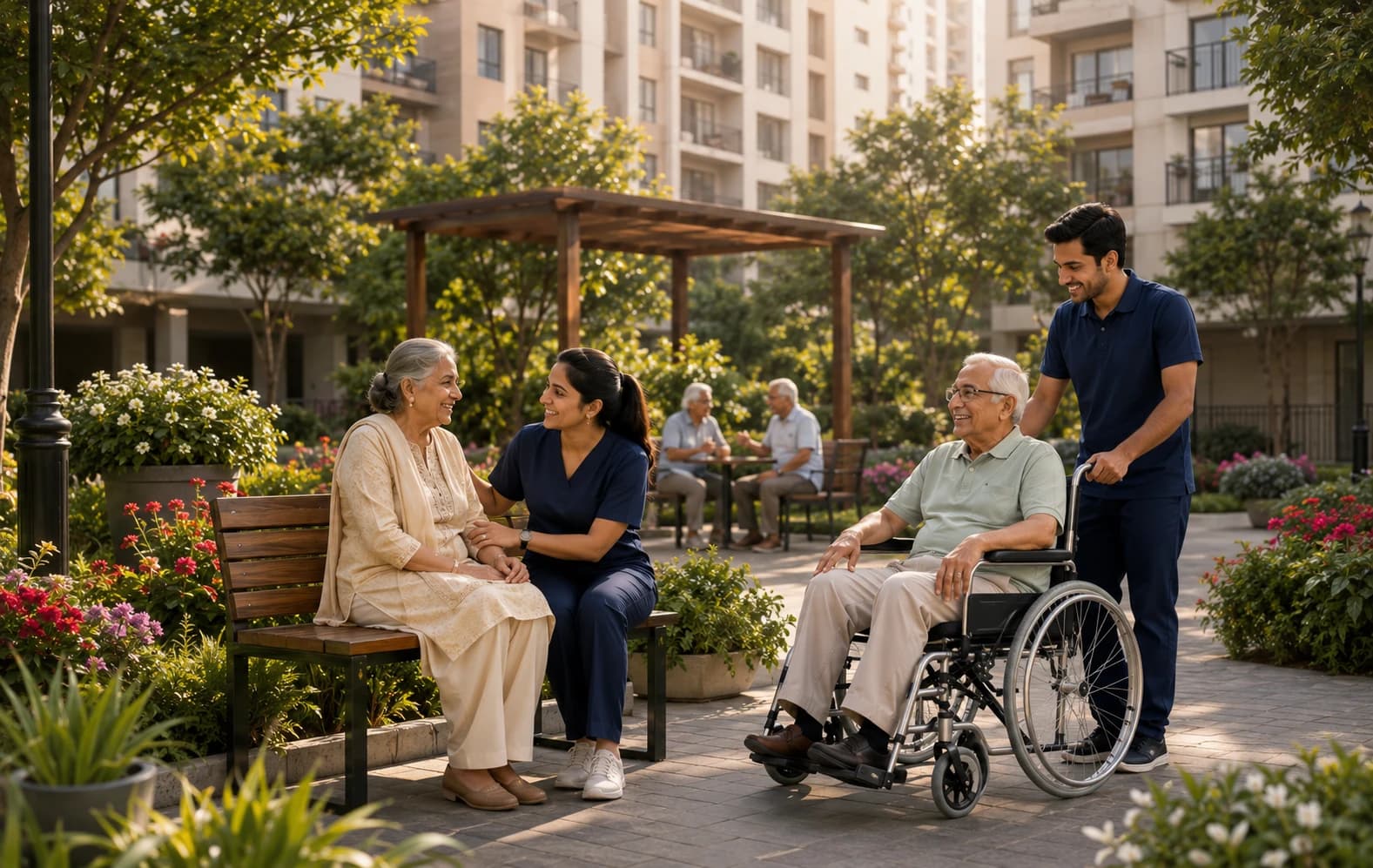
A strong community isn’t measured by its tallest buildings or finest amenities—it’s measured by how well it cares for its oldest residents.
Introduction
India is getting older.
Not just in age—but in the way families live.
For generations, grandparents, parents, and children often lived together under one roof. Daily care happened naturally within the family.
Today, urban life looks very different.
Children move to other cities or countries for work. Dual-income households spend long hours at the office. Elderly parents increasingly live alone or spend much of the day without immediate family nearby.
Despite being surrounded by hundreds of neighbours in apartment communities, many senior citizens still experience isolation, limited mobility, and uncertainty during emergencies.
This isn’t simply a family challenge.
It’s becoming a community challenge.
As India’s cities continue to grow vertically, gated communities have a unique opportunity to create environments where older adults can continue living independently while feeling safe, supported, and connected.
This guide explores how families, Resident Welfare Associations (RWAs), neighbours, and trusted caregivers can work together to build an elder-friendly community.
Why Elder Care Is No Longer Just a Family Responsibility
Families remain the primary source of love and support.
But modern lifestyles make it difficult for children to be physically present every day. A working professional may spend:
- 10 hours at work
- 2 hours commuting
- Several days each month travelling
Even when children want to help, distance and schedules often make continuous support impossible.
This is why elder care today requires a partnership between:
- Families
- Professional caregivers
- Neighbours
- Residential communities
- Technology
The Hidden Challenges Older Adults Face
Many challenges are invisible until a crisis occurs. Older adults may struggle with:
- Falls and mobility issues
- Managing medications
- Preparing nutritious meals
- Loneliness and social isolation
- Difficulty visiting hospitals
- Forgetfulness
- Limited digital literacy
- Household chores
- Emergency situations
- Transportation
These aren’t occasional inconveniences—they affect quality of life every day.
Every Senior Citizen Has Different Needs
Not all elderly residents require full-time assistance. Understanding their needs is the first step.
Independent Seniors
They manage daily activities but appreciate occasional support with shopping, transportation, or technology.
Seniors with Medical Conditions
They may require assistance with medication reminders, specialised meals, mobility, or regular health monitoring.
Seniors Living Alone
Safety, companionship, and emergency response become especially important.
Couples Living Independently
Even when two seniors live together, both may need occasional support with physically demanding tasks or medical appointments.
The Role of Families
Families can create a safer environment by:
- Sharing emergency contacts with trusted neighbours.
- Creating a list of medications and medical history.
- Scheduling regular video or phone calls.
- Ensuring trusted caregivers understand routines and preferences.
- Installing simple safety devices where appropriate.
The goal isn’t to reduce independence.
It’s to strengthen it.
The Role of RWAs
Resident Welfare Associations can play a meaningful role without becoming healthcare providers. They can help by:
Maintaining a Voluntary Senior Citizen Registry
With consent, maintain basic emergency information for residents who wish to participate.
Organising Health Camps
Partner with hospitals for periodic health check-ups.
Emergency Response Plans
Ensure security personnel know emergency procedures.
Accessible Infrastructure
Prioritise ramps, handrails, adequate lighting, and seating areas.
Community Engagement
Organise walking groups, hobby clubs, yoga sessions, and cultural activities to reduce isolation.
Small initiatives can significantly improve quality of life.
Choosing the Right Elder Caregiver
A caregiver provides much more than physical assistance.
They often become a trusted companion. Look for qualities such as:
- Patience
- Empathy
- Reliability
- Respect
- Good communication
- Basic first-aid knowledge
- Experience with elderly care
Technical skills matter, but compassion matters just as much.
10 Questions to Ask Before Hiring an Elder Caregiver
- What experience do you have caring for older adults?
- Have you supported people with specific medical conditions?
- How would you respond during an emergency?
- Are you comfortable assisting with mobility?
- How do you ensure dignity and respect while providing care?
- Can you assist with medication reminders?
- How do you encourage companionship and conversation?
- Can you prepare meals based on dietary restrictions?
- Can you provide references from previous families?
- What questions do you have about our family’s expectations?
These conversations help families understand not only experience but also the caregiver’s attitude toward elder care.
Care Is More Than Medical Support
Many older adults don’t primarily need medical attention.
They need connection. Simple activities often matter most:
- Sharing conversations
- Reading together
- Playing board games
- Going for short walks
- Helping with video calls
- Celebrating birthdays and festivals
- Encouraging hobbies
Emotional well-being is just as important as physical health.
Building a Community That Looks Out for One Another
Imagine a neighbourhood where:
- Neighbours occasionally check in on seniors living alone.
- Security personnel know emergency contacts.
- Trusted caregivers are easy to identify.
- Residents volunteer during emergencies.
- Families feel reassured even when living in another city.
This isn’t about replacing family.
It’s about strengthening the support system around them.
Technology Can Support, Not Replace, Human Care
Technology can help families stay informed through:
- Appointment reminders
- Digital health records
- Emergency contacts
- Care schedules
- Communication tools
But no app can replace a caring conversation or a neighbour willing to help during difficult moments.
Technology should strengthen human relationships—not replace them.
Signs That an Elderly Parent May Need Additional Support
Consider extra assistance if you notice:
- Frequent falls or balance issues
- Missed medications
- Difficulty cooking or eating
- Social withdrawal
- Memory concerns
- Unexplained weight loss
- Difficulty managing household tasks
- Increasing dependence on neighbours for daily activities
Early support often helps seniors remain independent for longer.
Frequently Asked Questions
Not necessarily. The level of support depends on their health, mobility, and daily routines. Some seniors benefit from a few hours of assistance each day, while others may require full-time care.
Begin with a trial period, speak to references, observe how they interact with your loved one, and ensure they respect the senior's independence and dignity.
Yes, provided it is voluntary, collected with informed consent, and handled responsibly while respecting residents' privacy.
Final Thoughts
Growing older should never mean growing isolated.
Every senior deserves to feel safe, respected, and connected to the community around them.
Families will always remain at the heart of elder care, but modern life calls for stronger neighbourhood support systems—where neighbours, caregivers, RWAs, and technology work together to help older adults continue living with dignity and independence.
Because a truly caring community isn’t defined by luxury amenities.
It’s defined by how it supports the people who need it most.
About GoYolo
GoYolo is building India’s trusted neighbourhood workforce platform, helping families connect with verified caregivers, home cooks, housekeepers, drivers, and other household professionals while strengthening the support systems within residential communities.
Our long-term vision is to make neighbourhoods more connected, trustworthy, and inclusive—where families can find reliable support close to home, professionals can build respected careers, and communities become safer and more caring for residents of every age.
Because every neighbourhood should be a place where growing older feels secure, supported, and never alone.
Explore verified elder care